Real recordings, not a mock-up
Watch the actual drive.
Every clip below is an unedited terminal recording of the real Swarmfile engine: the same binary we ship. Nothing is re-enacted. Scrub them, replay them, copy the commands straight out.
The whole idea in 30 seconds
Open a file. Don’t download it.
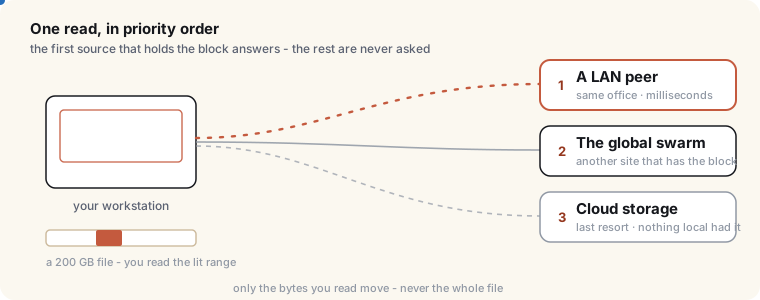
A machine joins a shared project and opens a file it has never seen. It appears instantly: browsing a project costs no disk. Scrub to the middle, read a megabyte, and a few megabytes move, not the file.
More, all of it real
On-demand byte-range streaming
Listing is free. Reading is proportional.
A machine that has never seen the file lists the project: no bytes move, it's all metadata. Then it reads one megabyte from the middle, and a few megabytes move (the chunks around the read, not the file).
Peer-to-peer over the local network
LAN-first, and it survives a dead machine.
Three machines share one drive. A save on one appears on the others within seconds, and the bytes come from a peer across the office, not the cloud. Then a machine dies and the file is still there.
Degrades to an error, never a hang
The hub goes down. The drive keeps working.
With the control plane offline, a cached file still reads in full and a never-fetched one fails at once instead of hanging. Reconnect, and it's simply back.
Durable, non-blocking write queue
Saves return at local-disk speed.
A 48 MB save returns first, with dozens of blocks still queued behind it. The application never waits for the upload; the queue drains on its own.
Content-verified NAS import
Start from the library you already have.
Point it at an existing NAS share. One command imports it (reading only, never writing back), verifying every file by content on the way in. Then it's just the drive, on any machine.
Headless, version-pinned workflows
Pin a render to an exact version.
A headless node signs in with a project-scoped key, forks a branch pinned to a committed tag, and hydrates the whole scope before the job, so no frame is a network round-trip. Artists keep moving main; the render stays frozen.
Run it yourself
No sandbox, no reset: the real client, on your machine, with a 7-day trial. Nothing charged until day 7.